
By Chona · Published August 23, 2026
Most “passive income” ideas require either money upfront or months of grinding before you see a dollar. Selling Notion templates is different — the product costs you nothing to build, nothing to store, and nothing to ship. Every sale is pure margin.
The real barrier used to be that building a polished Notion template took genuine skill and hours of fiddling. That barrier is mostly gone now. ChatGPT (free tier is enough to start) can draft the entire database structure, write every property name, and suggest formulas you’d never think of yourself. Your job shrinks to testing it as a real user would and listing it for sale.
This playbook gives you the exact steps, the copy-paste prompts, the pricing numbers, and the specific places to find your first buyer — all in one place. If you can use Google Docs, you can finish this in a weekend.
Before You Start: Quick Checklist
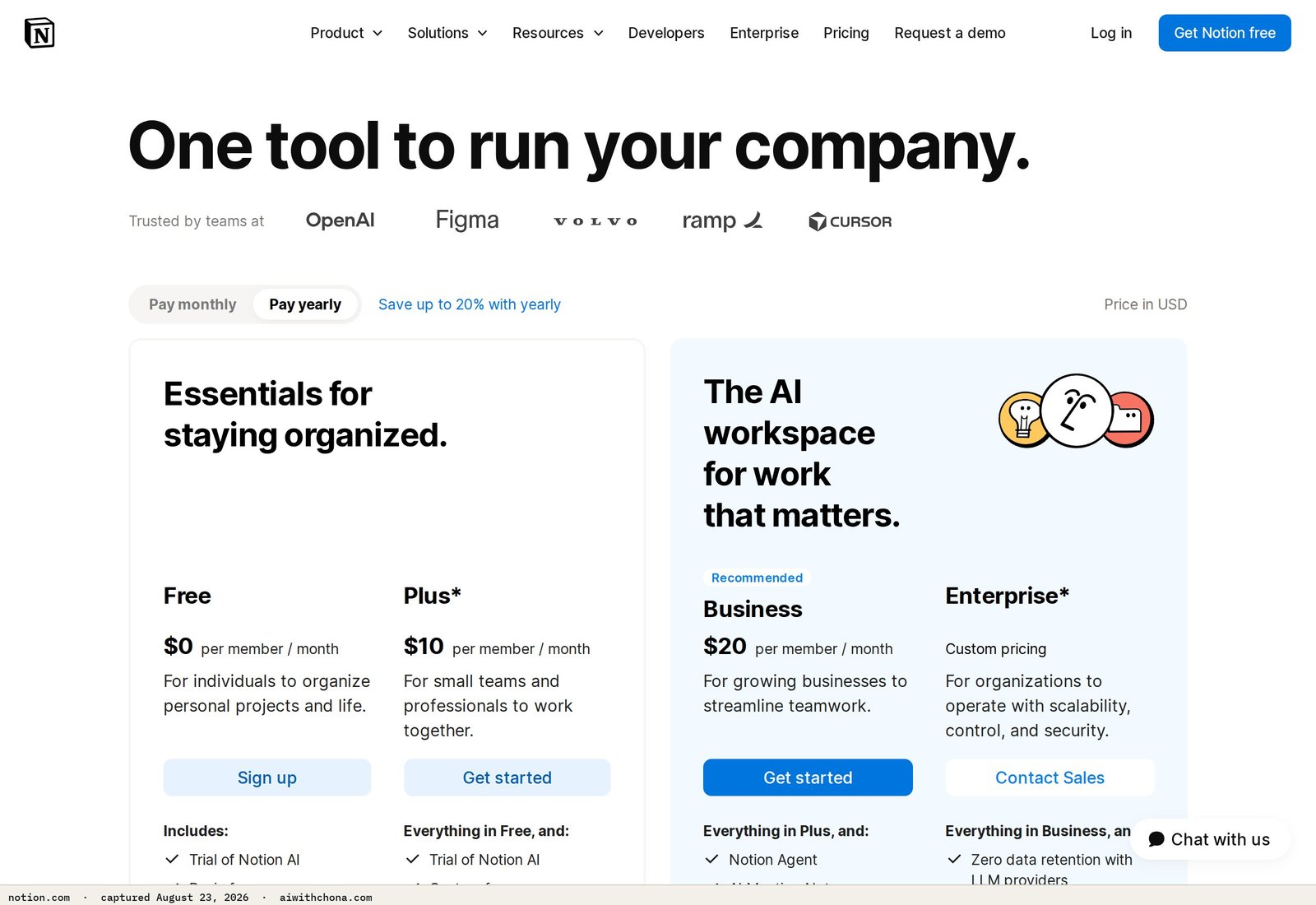
- Free Notion account — Notion’s free plan lets you build, duplicate, and share templates at $0. You do not need Notion Plus to sell templates.
- ChatGPT free account — The free tier at chat.openai.com is enough for every prompt in this guide. If you’re already a Plus subscriber ($20/mo), great — but don’t pay for it just for this.
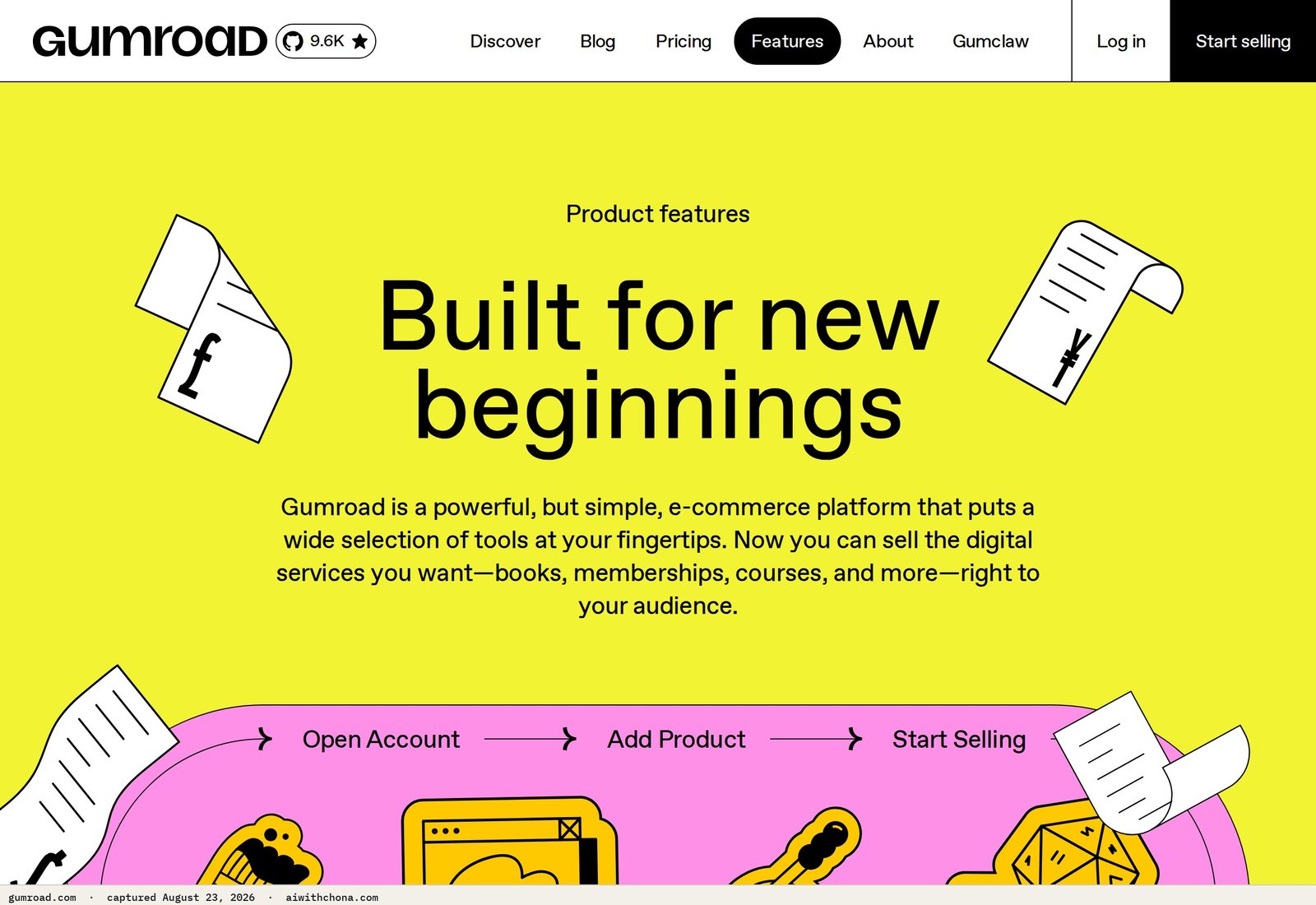
- A Gumroad account — Free to create. Gumroad charges a flat 10% fee on each sale; there’s no monthly subscription on the free plan. That’s your storefront.
- One specific audience in mind — Not “productivity lovers.” Think: freelance designers, real estate agents, homeschool parents, indie authors, small landscaping businesses. The narrower, the faster your first sale.
- Two hours this weekend — That’s enough to finish Steps 1–4 and have a listing live.
If you want a broader look at building income streams like this one, our guide on how to build a simple AI side hustle covers the full landscape.
Step 1: Pick a Niche Audience (Not a Template Type)
The single biggest mistake beginners make is building a “general productivity” template and wondering why nobody buys it. The templates that sell are built for a specific person with a specific pain.
Go to Reddit. Search r/freelance, r/realestate, r/homeschool, r/Notion, r/smallbusiness, and r/sidehustle. Look for posts where people complain about tracking things — clients, invoices, content calendars, lesson plans, job applications. That complaint is your product brief.
Five niche + pain combos that consistently appear in Notion marketplaces:
- Freelancers tracking client projects and invoices
- Job seekers managing applications and follow-ups
- Content creators batching and scheduling posts
- Real estate agents tracking listings and leads
- Homeschool parents organizing curriculum and grades
Pick one. You will build your first template for that person specifically. Everything — the property names, the views, the sample data — should feel like it was made for them, not a generic user.
Done looks like: You can finish this sentence — “My template is for [specific person] who struggles to [specific problem] and currently tracks it in [spreadsheets / sticky notes / nothing].”
Step 2: Use AI to Build the Template Structure
This is where ChatGPT does the heavy lifting. You’re not writing code. You’re having a conversation that produces a complete database blueprint you then build inside Notion.
Open ChatGPT and paste this prompt, filling in your niche:
You are a Notion template designer. I'm building a template for [freelance designers who struggle to track client projects, invoices, and follow-ups].

Give me:
1. A list of 4-6 Notion databases this template needs, with a one-line purpose for each.
2. For each database, list every property (field) it should have — include the property type (text, number, select, date, relation, formula, checkbox, URL).
3. For any select or multi-select properties, list the exact options.
4. Suggest 2-3 Notion views for the most important database (e.g., Board, Calendar, Table, Gallery) and explain what each view shows the user.
5. Suggest one formula property that would save this user real time — write the exact Notion formula syntax.
6. Write 3-5 rows of realistic sample data for the main database so the buyer can see it in action immediately.

Be specific. Use the language this person actually uses in their work.
Run that once. Then ask a follow-up:
Now write a short "How to Use This Template" guide I can include as a page inside the template itself. It should have:
- A welcome paragraph (2 sentences, warm and practical)
- A numbered quick-start section (5 steps, each one sentence)
- A "Tips" section with 3 bullets specific to this niche
Keep it under 300 words. Write it as if you're talking to a [freelance designer], not a generic user.
You now have your entire template spec and its onboarding guide — generated in under 10 minutes.
Done looks like: You have a complete list of databases, properties, views, a formula, sample data, and a welcome guide — all ready to build in Notion.
Step 3: Build It in Notion (Faster Than You Think)
Open Notion. Create a new page and title it with your niche (e.g., “Freelance Client Tracker”). Build each database ChatGPT described — click “+ New database,” name it, and add the properties one by one from your list. Notion’s property panel is a simple dropdown; you’re just selecting types and typing names.
Add your sample data rows. Set up the views ChatGPT suggested. Paste your “How to Use” guide as the top page of the template.
The one gotcha here: Notion relations (linking two databases together) can feel confusing the first time. If ChatGPT suggested a relation and you get stuck, just ask: “Walk me through creating a relation property in Notion between [Database A] and [Database B], step by step.” It will give you the exact clicks.
Once built, click “Share” → “Share to web” → toggle on “Allow duplicate as template.” Copy that link. That is the product you’re selling — a “Duplicate” link that adds a clean, pre-filled copy of your template to the buyer’s Notion account.
Done looks like: You have a live Notion page with a public “Duplicate” link that works when you paste it in a private browser tab.
Step 4: Create a Simple Cover Image with Canva
Buyers judge templates by their cover image before they ever see the inside. A good cover takes 15 minutes in Canva (free plan works fine).
Search Canva for “Notion template preview” — there are free mockup frames that let you drop a screenshot of your template inside a clean device frame. Add your template name, a one-line benefit (“Track every client project without a single spreadsheet”), and a simple color background that matches Notion’s clean aesthetic (white, light gray, or one muted accent color).
Export as a PNG at 1280×800px. That’s your product thumbnail.
Done looks like: A PNG file that looks like a professional product image, not a screenshot.
Step 5: List and Price It — What to Charge
Create a free Gumroad account. Click “New product” → “Digital product.” Upload your cover image. In the product description, paste this structure (fill in your niche):
[Template Name] — Built for [Niche Audience]

If you're a [freelance designer] tracking clients in a messy spreadsheet (or your head), this template fixes that.

What's inside:
✓ [Client Projects database] with [Board and Calendar views]
✓ [Invoice tracker] linked to each project
✓ [Formula that auto-calculates outstanding balance]
✓ [5 rows of sample data] so you see it working immediately
✓ ["How to Use" guide] built right into the template

Works with Notion's free plan — no paid Notion account needed.

After purchase, you'll get one link. Click it, hit "Duplicate," and it's in your Notion in 30 seconds.

Questions? Email [your email].
What to charge:
| Situation | Price | Why |
|---|---|---|
| Single beginner template, first listing | $17 | Low enough to impulse-buy; high enough to signal value |
| Single polished template with detailed guide | $27 | Once you have 5+ reviews, raise to this |
| Bundle of 3 related templates | $47 | Best revenue per transaction; easiest upsell |
| Full system (5+ templates + video walkthrough) | $97 | Months 3+ once you have an audience and reviews |
Don’t go below $17. Templates priced at $5–$9 are ignored or seen as low-quality. Gumroad’s 10% fee on a $17 sale is $1.70 — you net $15.30 per sale before any payment processing fees.
Worked example: 3 templates at $17 average, 12 sales per month across all three = $204/mo gross. Minus Gumroad’s ~10% = $183.60. Add a $47 bundle that sells 4 times = $188 more. Total: ~$371/mo at roughly 16 sales. Hit 25 sales across a $27 average and you’re past $500 net. That’s the $500/mo target — achievable in month 2 or 3 with consistent community presence, not month 1.
Done looks like: A live Gumroad listing with a cover image, description, price set, and your Notion duplicate link in the “product file” field.
Step 6: How to Find Your First Customer (No Ads, No Budget)
Your first sales will not come from Google. They’ll come from communities where your target buyer already hangs out. Here are the three channels that consistently produce first sales for beginners, in order of speed.
Channel 1 — Reddit (fastest): Find 2–3 subreddits where your niche lives (r/freelance, r/realestate, r/homeschool, r/Notion, r/digitalnomad). Read the rules — most allow value posts but ban direct promotion. Post something genuinely helpful first: answer questions, share a tip. After a few days of real participation, post your template with this framing:
Post title: I built a free Notion client tracker for freelancers — here's the link

Post body:
I kept losing track of which clients owed me money, so I built a Notion template to fix it. It has a client database, invoice tracker, and a formula that shows outstanding balances automatically.

Free version is here: [your Gumroad link — set price to $0 for a lite version]

I also made a full version with [additional feature] for $17 if that's useful: [paid link]

Happy to answer questions about how I set it up.
Give away a lite version (remove one database or one view) for free. The free download builds your Gumroad email list. That list is how you sell the paid version and every template you build after this.
Channel 2 — Facebook Groups: Search Facebook for groups like “Notion for Freelancers,” “Notion Templates,” “Real Estate Agents Networking,” or whatever matches your niche. Most have 5,000–50,000 members. Post the same value-first approach. Do not post a Gumroad link on day one — comment genuinely on three posts first, then share.
Channel 3 — Direct DM to warm leads: When someone posts in any of these communities saying “does anyone have a template for X,” that is a buying signal. DM them:
Hey [name] — I saw your post about tracking [clients/invoices/listings]. I actually just built a Notion template for exactly that. I have a free lite version and a $17 full version. Want me to drop the link? No pressure at all, just figured it might help.
This message converts because it’s responding to an expressed need, not cold pitching.
Done looks like: You’ve posted in at least 3 communities and sent at least 5 DMs to people who expressed the exact problem your template solves.
What Goes Wrong (And How to Fix It)
- Niche too broad → narrow to one job title or one specific workflow
- No sample data → buyers can’t picture using it; add 5 realistic rows
- Priced at $5 → raise to $17; low price signals low value
- One listing, then silence → post in communities every week, not once
- Building a template nobody asked for — validate with a Reddit search before you build
- Skipping the free version — the free lite is your list-builder and trust signal
- Expecting sales in week one — first sale typically comes in week 2–3 with daily community activity
Failure point 1 — No traction after 2 weeks: You probably posted once and stopped. Consistent community presence drives Notion template sales more than any other factor. Set a calendar reminder: post or comment in at least one relevant community every weekday for 30 days.
Failure point 2 — Buyers confused by the template: Your “How to Use” guide is missing or too short. Go back to your ChatGPT prompt from Step 2 and ask it to expand the guide with screenshots you’ll add manually. A confused buyer leaves a bad review or asks for a refund.
Failure point 3 — Notion’s duplicate link stops working: This happens if you accidentally delete the original page or change the share settings. Keep your original template page in a dedicated Notion workspace you don’t touch. Always duplicate from that master copy when testing.
Realistic Earnings: What the First 90 Days Actually Look Like
Most people building a Notion template side hustle see 0–2 sales in the first 30 days, 3–8 sales in the second month, and 8–20 sales in month three — if they post consistently in communities. The ones who land on the high end sent at least 30 outreach messages and posted in communities at least 4 days a week. The ones who land at zero posted once and waited.
A three-template catalog (one single at $17, one at $27, one bundle at $47) hitting 20 total sales in month 3 generates about $560 gross, or roughly $500 after Gumroad’s fees. That’s the $500/mo target — and it compounds, because your Gumroad email list keeps growing and every new template you release goes to buyers who already trust you.
Total startup cost: $0 if you use Notion free + ChatGPT free + Gumroad free + Canva free. The only real investment is time: about 4–6 hours to build your first template and listing, then 30 minutes a day on community outreach.
If you’re already running other AI-powered services and want to see how this fits into a broader automation picture, our guide on the best AI tools to automate a small online business is worth a read.
AI Tools for Notion Template Creation: At a Glance
| Tool | Best for | Free plan | Paid | Verdict |
|---|---|---|---|---|
| ChatGPT | Database design, formulas, copy | Yes — enough for all prompts here | $20/mo (Plus) | Start free; upgrade only if you’re building 5+ templates/week |
| Notion | Building and hosting the template | Yes — unlimited blocks, shareable links | $10/mo (Plus) | Free plan is all you need to sell templates |
| Canva | Cover images and mockups | Yes — mockup frames and templates included | $15/mo (Pro) | Free plan is enough; Pro only if you’re designing covers daily |
| Gumroad | Storefront and email list | Yes — 10% fee per sale, no monthly cost | N/A (fee-based only) | Best first storefront; switch to Lemon Squeezy at scale if fees matter |
For a deeper look at how Notion AI stacks up against ChatGPT for productivity work, our Notion AI vs ChatGPT honest comparison breaks it down clearly.
Frequently Asked Questions
Do I need to know how to code or use Notion formulas to sell templates?
No coding knowledge is required. Notion formulas look technical but are simpler than Excel functions, and ChatGPT will write the exact formula syntax for you when you ask. Your job is to paste it into the right property field and test that it displays correctly — that takes about two minutes once you know where to click.
Can I sell Notion templates if I’m not a Notion expert?
Yes, and most successful beginner sellers aren’t Notion power users. What matters is that you understand your niche audience’s problem well enough to build something useful for it. You don’t need to know every Notion feature — you need to know the 5–6 features that solve one specific workflow problem for one specific type of person.
How long does it take to make the first sale selling Notion templates?
Based on patterns reported across communities like r/Notion and r/sidehustle, sellers who post a free lite version in relevant communities and follow up with DMs to people who expressed the problem typically see their first sale within 9–21 days. Sellers who list and wait without active outreach often wait 60+ days or see nothing at all.
Is the Notion free plan enough to build and sell templates?
Notion’s free plan gives you unlimited blocks, the ability to share pages publicly, and the “Duplicate as template” feature — which is exactly what buyers use to add your template to their own account. You do not need a paid Notion plan to build or sell templates.
What AI tools for Notion template creation are actually worth using?
ChatGPT’s free tier handles everything: database structure, property names, formula syntax, and the welcome copy inside the template. Canva’s free plan handles cover images. Gumroad handles selling. You can run this entire business at $0/mo in tool costs until you’re earning enough that upgrading any of these makes sense financially.
Trading Command Center is a Google Sheets portfolio dashboard plus a small, explicit Python bot on the Alpaca API — paper trading by default, every rule on one screen.
Your Next Step
The only thing between you and a live listing is building the first template. Everything else in this guide is just detail around that one action.
Open ChatGPT, pick your niche audience, and paste the prompt from Step 2. That’s your Monday morning task. The whole structure comes back in under two minutes — and from there, you’re building, not planning.
If you want a hand getting started with AI prompts more broadly, our free AI Quick-Start guide walks you through the foundational moves — grab it from the form below.
Grab the free AI Quick-Start guide — the exact tools and first steps that actually work, no fluff. Straight to you.